
Treatments
Treatments
What each treatment involves
On the live site each of these is its own page. Open one to read Dr. Anderson's description.
Step oneMedical therapies
Sprays, rinses, medication and allergy care
Medical therapies
Sprays, rinses, medication and allergy care
Medical therapies include nasal steroids, nasal antihistamines, nasal saline rinses, oral antihistamines, oral antibiotics, culture-directed sinus rinses, biologic therapies and allergy shots.
 Nasal steroid spray
 Nasal antihistamine spray
 Saline sinus rinse
 Oral antihistamines
 Oral antibiotics
 Culture-directed sinus rinse
 Biologic therapy
 Allergy shots
New illustrations made for this site.
Step two · In officeBalloon sinuplasty
Opens blocked sinuses without cutting
Balloon sinuplasty
Opens blocked sinuses without cutting
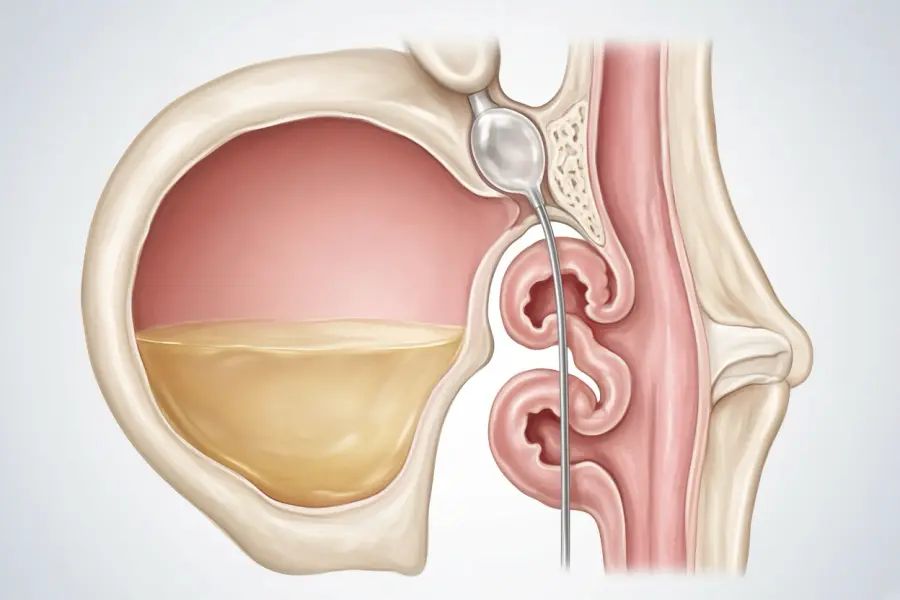
Balloon sinuplasty treats chronic sinusitis, sinus inflammation lasting more than 12 weeks, that has not responded to medication. It works much like a cardiac angioplasty, gently opening blocked pathways.
- Numbing. Sprays, anesthetic-soaked gauze or small injections fully numb the nose. Most of the visit is spent here.
- Insertion. Guided by a tiny camera, a thin catheter is placed in the blocked sinus opening.
- Inflation. A small balloon is inflated for a few seconds to widen the opening.
- Flushing and removal. Saline may flush out trapped mucus, then the balloon is removed.
Step two · In officePosterior nasal nerve ablation
For a constant runny nose or drip
Posterior nasal nerve ablation
For a constant runny nose or drip
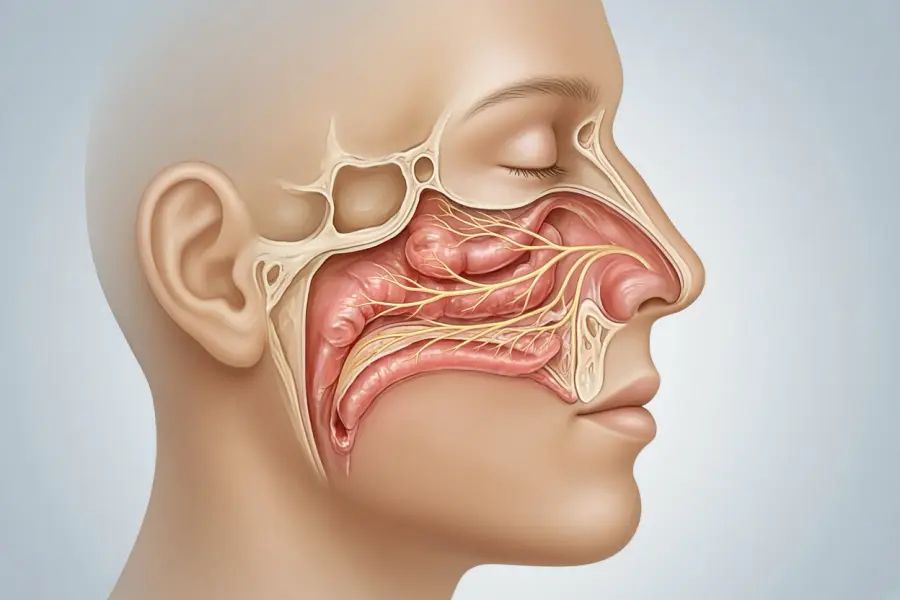
PNN ablation treats chronic rhinitis, allergic or non-allergic, that does not respond to sprays or medication. It calms overactive nerves deep in the nose that trigger excess mucus, runny nose and congestion, using cold therapy (such as ClariFix) or radiofrequency energy (such as RhinAer).
Clinical studies show roughly 80% of patients get significant, long-lasting relief.
Step three · SurgeryImage-guided endoscopic sinus surgery
For sinus infections that never clear
Image-guided endoscopic sinus surgery
For sinus infections that never clear
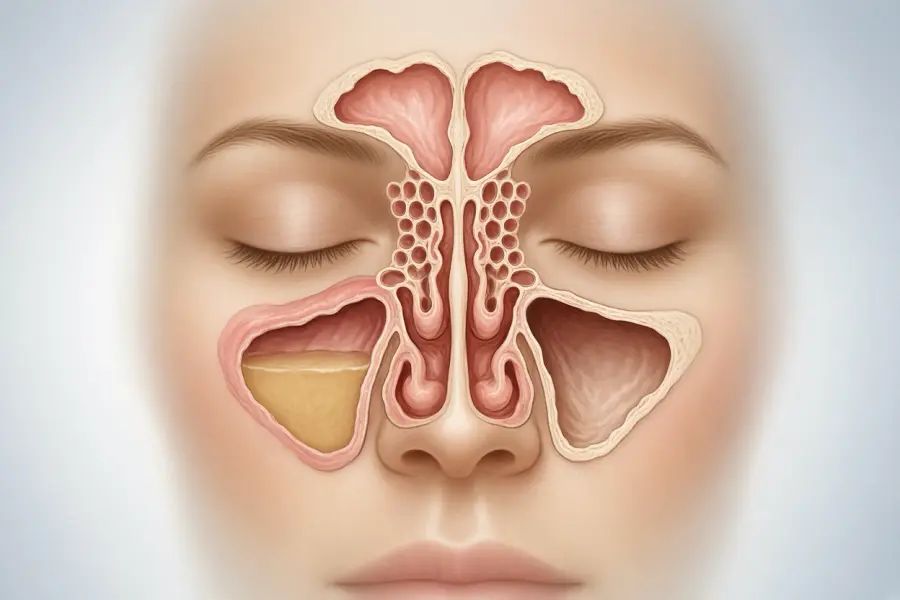
Do you get several sinus infections a year, or one that never seems to clear? If a CT scan shows sinusitis and medical therapy has not worked, you may benefit from image-guided endoscopic sinus surgery.
- Mapping. CT scans create a 3D roadmap of your sinuses.
- Real-time tracking. Each instrument's live position shows against your CT images.
- Added safety. Helps the surgeon avoid the brain, eyes, optic nerves and major blood vessels.
Step three · SurgerySeptoplasty
Straightens a deviated septum
Septoplasty
Straightens a deviated septum
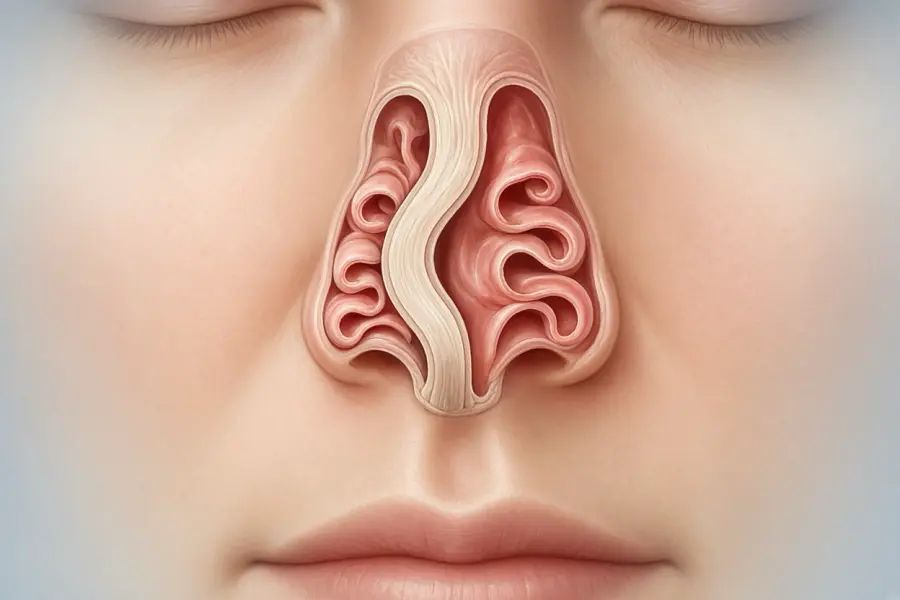
Septoplasty straightens the wall of bone and cartilage that divides your nose. A crooked septum can badly block airflow on one or both sides, causing congestion, snoring, recurrent sinus infections and nosebleeds.
The surgeon works through the nostrils, reshapes or removes the crooked parts, and closes with dissolvable stitches. Soft splints may hold the septum while it heals.
Step three · SurgeryTurbinate reduction
Shrinks swollen tissue blocking airflow
Turbinate reduction
Shrinks swollen tissue blocking airflow
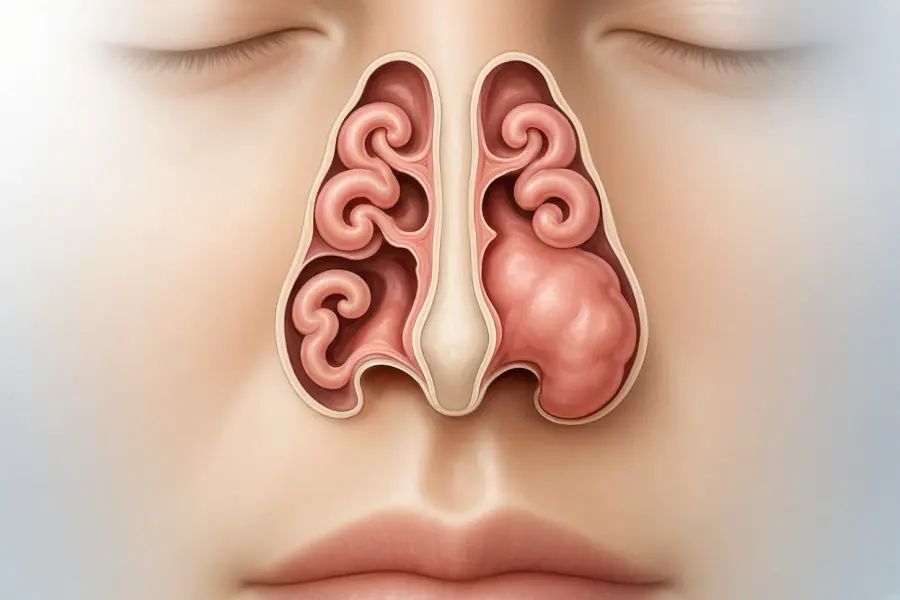
Turbinates warm, humidify and filter the air you breathe. When allergies or infections keep the lowest pair permanently swollen, you feel stuffed up and breathe through your mouth.
Usually the inside of the turbinate is shaved down while its lining is kept, for quicker healing. Sometimes a partial resection gives a better long-term result.
Step two or threeNasal valve repair and VivAer
When your nose caves in as you breathe
Nasal valve repair and VivAer
When your nose caves in as you breathe
If the narrowest part of the nasal airway narrows even a few degrees, the side walls cave in when you inhale. It feels like breathing through a pinched straw. There are two ways to fix it.
Septal cartilage graft repair (surgery)
Cartilage from the septum is shaped into thin "spreader grafts" and stitched in place to hold the valve open, like an internal Breathe Right strip.
VivAer (in office)
An FDA-cleared treatment that uses gentle radiofrequency energy to reshape the inside of the nose, with no cutting.
Illustration coming soon.
Step one or threeNasal polyps and polypectomy
When you lose your sense of smell
Nasal polyps and polypectomy
When you lose your sense of smell
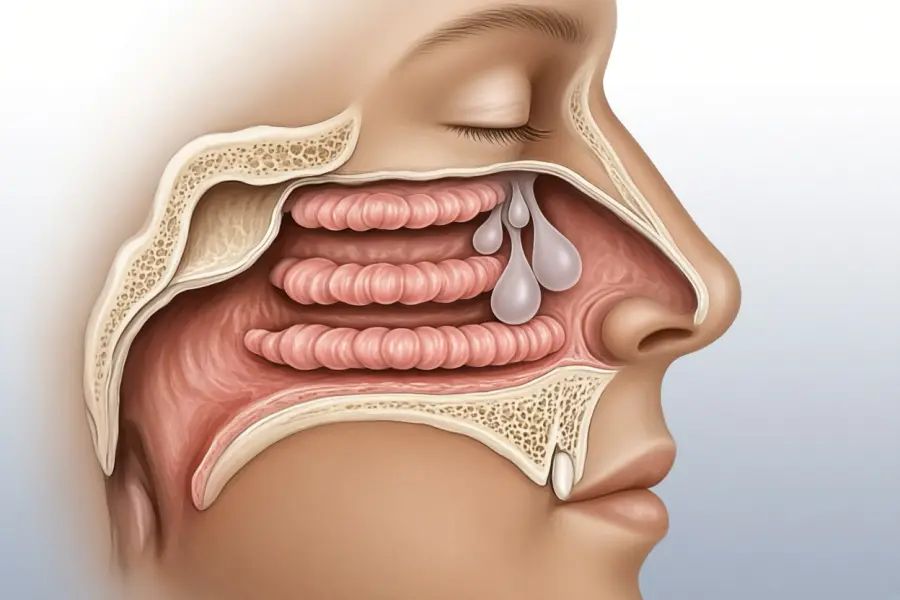
Nasal polyps are soft, noncancerous growths that look like small teardrops or grapes. They come from long-term inflammation and can cause a blocked nose, loss of smell and taste, drip, facial pressure and snoring.
Steroid sprays or rinses shrink smaller polyps, and oral steroids or biologic shots help severe cases. If medicine does not work, a minimally invasive polypectomy removes them.